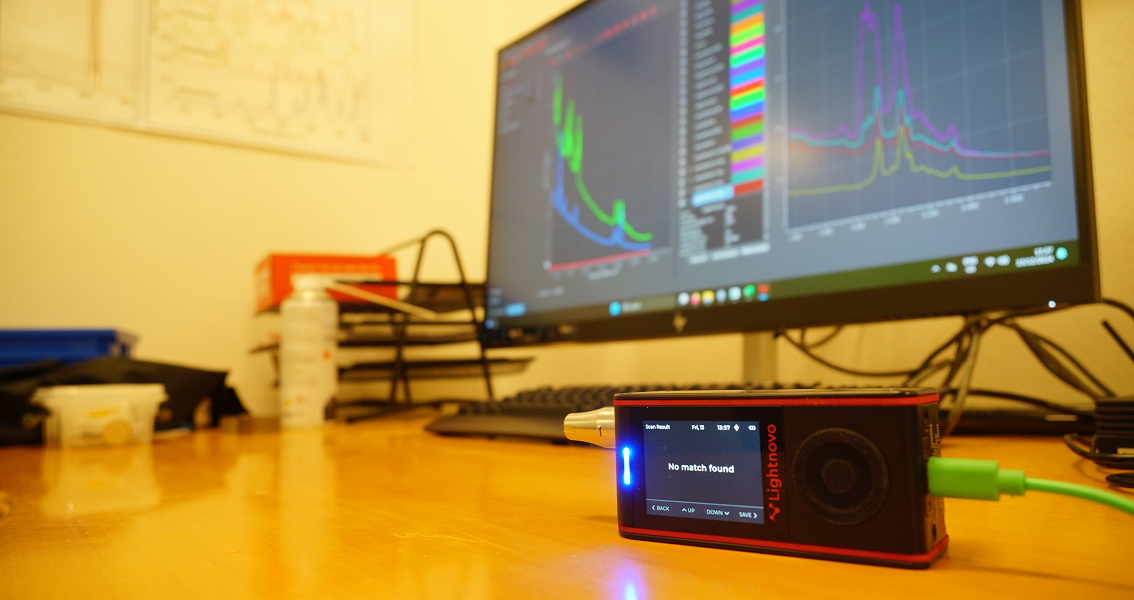
Low-frequency Raman spectroscopy has emerged as a powerful and increasingly important analytical technique for probing vibrational modes below approximately 200 cm⁻¹, offering unique insight into structural and intermolecular properties that are not accessible through conventional Raman measurements. While traditional Raman spectroscopy focuses primarily on the fingerprint region, low-frequency Raman extends analytical capabilities into the domain of lattice dynamics, interlayer interactions, and collective vibrational modes. These features are essential for understanding the physical structure and behavior of materials at a deeper level, particularly in advanced materials science, nanotechnology, polymer research, and pharmaceutical development.
In this technical note, Lightnovo presents the principles, instrumentation considerations, and real-world applications of low-frequency Raman spectroscopy, with a focus on enabling reliable, high-quality measurements in this traditionally challenging spectral region. Historically, access to low-frequency Raman signals has been limited due to strong Rayleigh scattering and instrumental constraints. However, recent advances in optical filtering, laser stabilization, and spectrometer design have significantly improved the ability to measure signals close to the laser line, opening new possibilities for both research and industrial applications.
In the pharmaceutical and polymer industries, low-frequency Raman spectroscopy is particularly relevant for polymorph identification and crystallinity analysis. Materials with identical chemical composition can exhibit different physical properties depending on their crystal structure. Low-frequency Raman enables the differentiation of these polymorphic forms by detecting subtle variations in lattice vibrations and intermolecular interactions. This capability is essential for ensuring product consistency, optimizing formulation development, and maintaining regulatory compliance in quality control processes.
To demonstrate the performance and reliability of the Lightnovo RG Pro Raman spectrometer for low-frequency measurements, this study includes experimental validation using several well-established reference materials. Sulfur is used as a calibration standard for low-frequency Raman shift measurements due to its well-defined lattice modes below 200 cm⁻¹, enabling verification of spectral accuracy.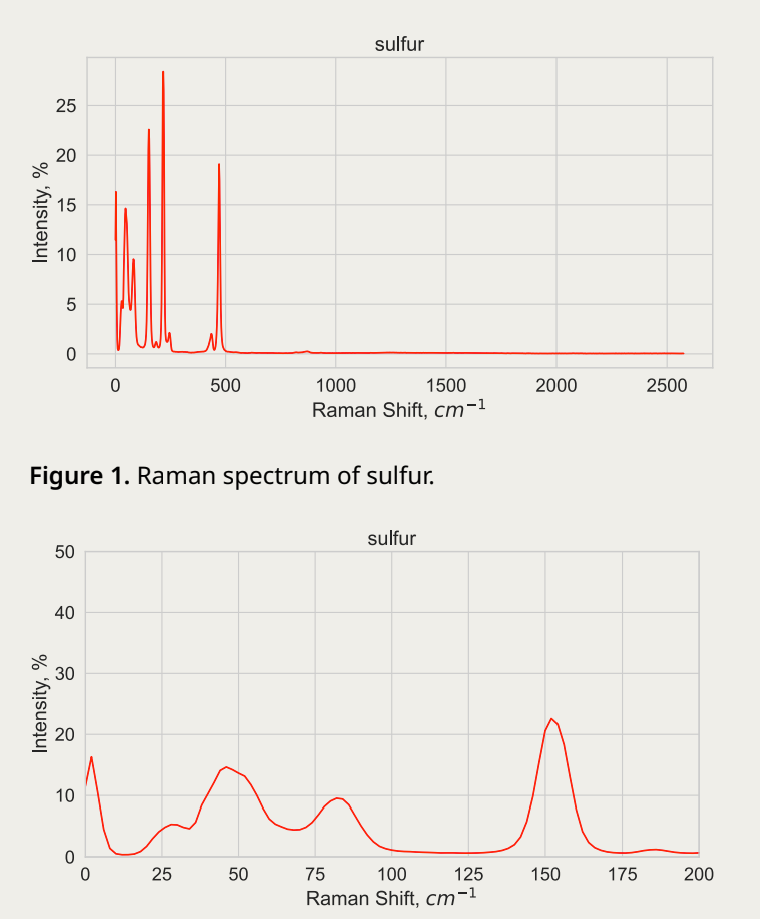
Polystyrene serves as a widely recognized reference for Raman shift calibration in both American and European standards, providing sharp and reproducible peaks for validating instrument performance. Calcite is employed to assess spectral resolution through its characteristic narrow peak at 1085 cm⁻¹, allowing precise evaluation of the instrument’s ability to resolve fine spectral features.
Overall, this technical note demonstrates that low-frequency Raman spectroscopy is not only a complementary extension of traditional Raman analysis but also a critical tool for unlocking deeper material insights. By enabling access to structural information related to long-range order and intermolecular interactions, it supports more advanced characterization workflows across multiple industries. Combined with Lightnovo’s advanced spectrometer design, optimized optical performance, and robust calibration capabilities, low-frequency Raman measurements can be performed with high confidence and precision.