Raman spectroscopy continues to evolve as a powerful analytical tool across industries—from pharmaceuticals and materials science to defense and environmental monitoring. At Lightnovo, we are committed to making this technology more accessible, flexible, and application-ready.
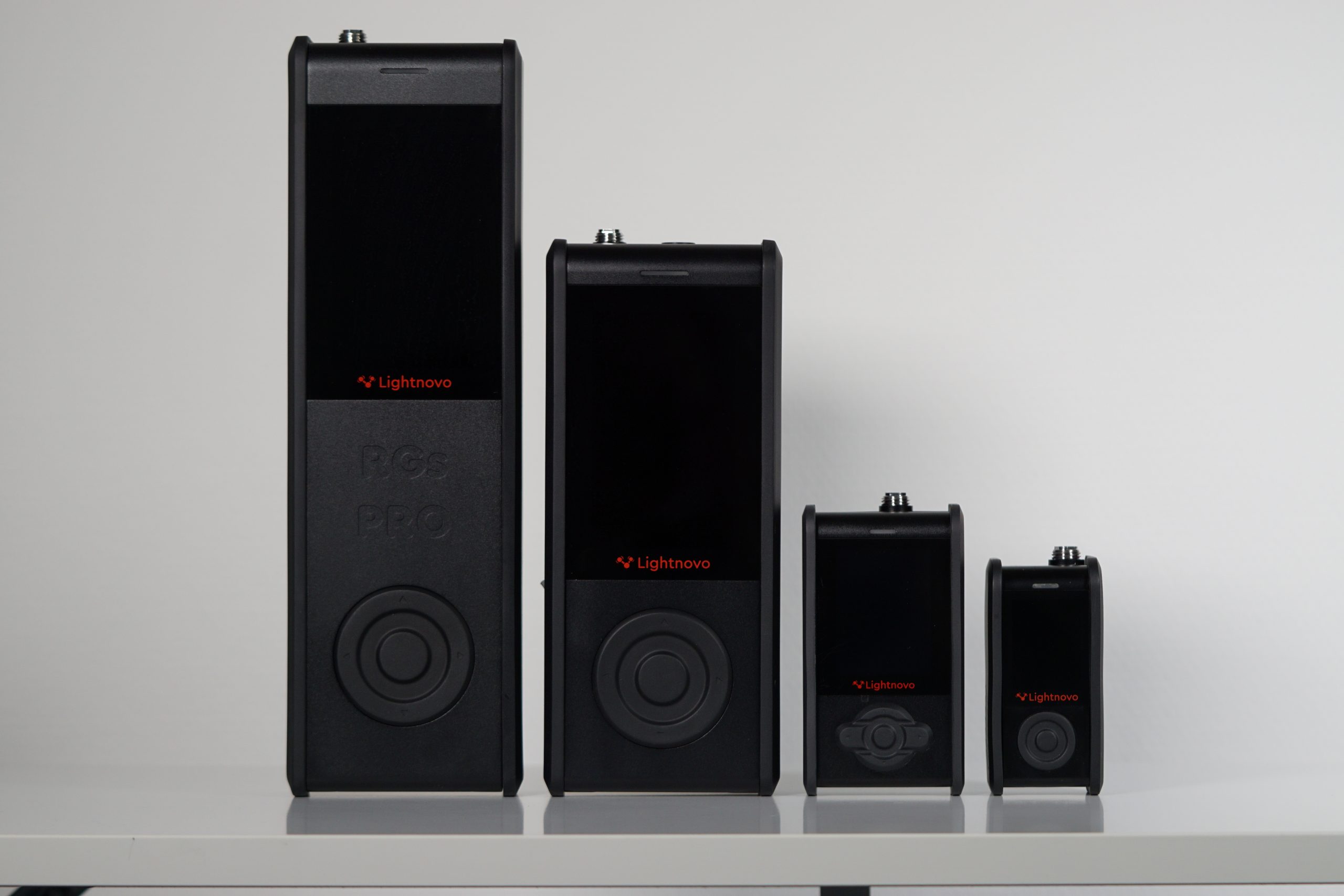
In our latest technical note, we present a comparative evaluation of three of our core Raman platforms operating at 785 nm: miniRaman, RG, and RG Pro. This study provides valuable insights into how each system performs under identical experimental conditions, and how their differences translate into real-world application value.
A Controlled and Comparable Approach
To ensure a fair and meaningful comparison, all three spectrometers were tested under identical conditions:
- Excitation wavelength: 785 nm
- Laser power: 50 mW
- Exposure time: 250 ms
- Repetitions: 10 scans
A set of well-established reference materials was used, including polystyrene, calcite, silicon, acetonitrile, and paracetamol, allowing evaluation across calibration accuracy, spectral resolution, and spectral range
Consistent Calibration Across All Platforms
One of the key findings is the excellent wavenumber calibration consistency across all three systems.
As shown in the calibration table on page 2, the deviation from reference peak positions is minimal across instruments, confirming robust and reliable performance.
Polystyrene, a widely used Raman reference material, demonstrated that:
- All systems reproduce peak positions with high accuracy
- Calibration remains stable across the spectral range
- Intensity consistency is maintained
This ensures confidence in both qualitative identification and quantitative analysis workflows.
Resolution: Where RG and RG Pro Stand Out
Spectral resolution is critical when distinguishing closely spaced peaks, particularly in complex samples.
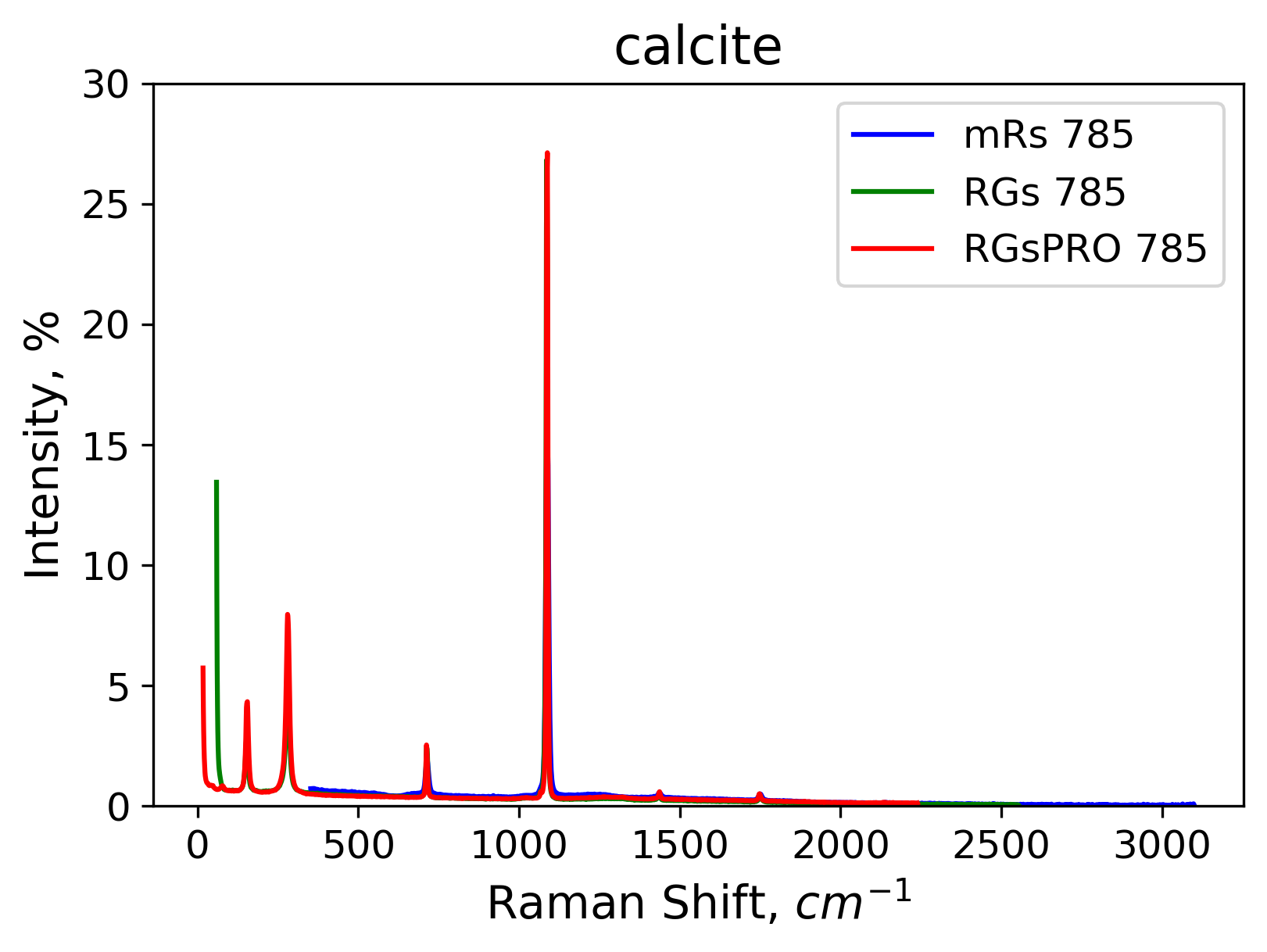
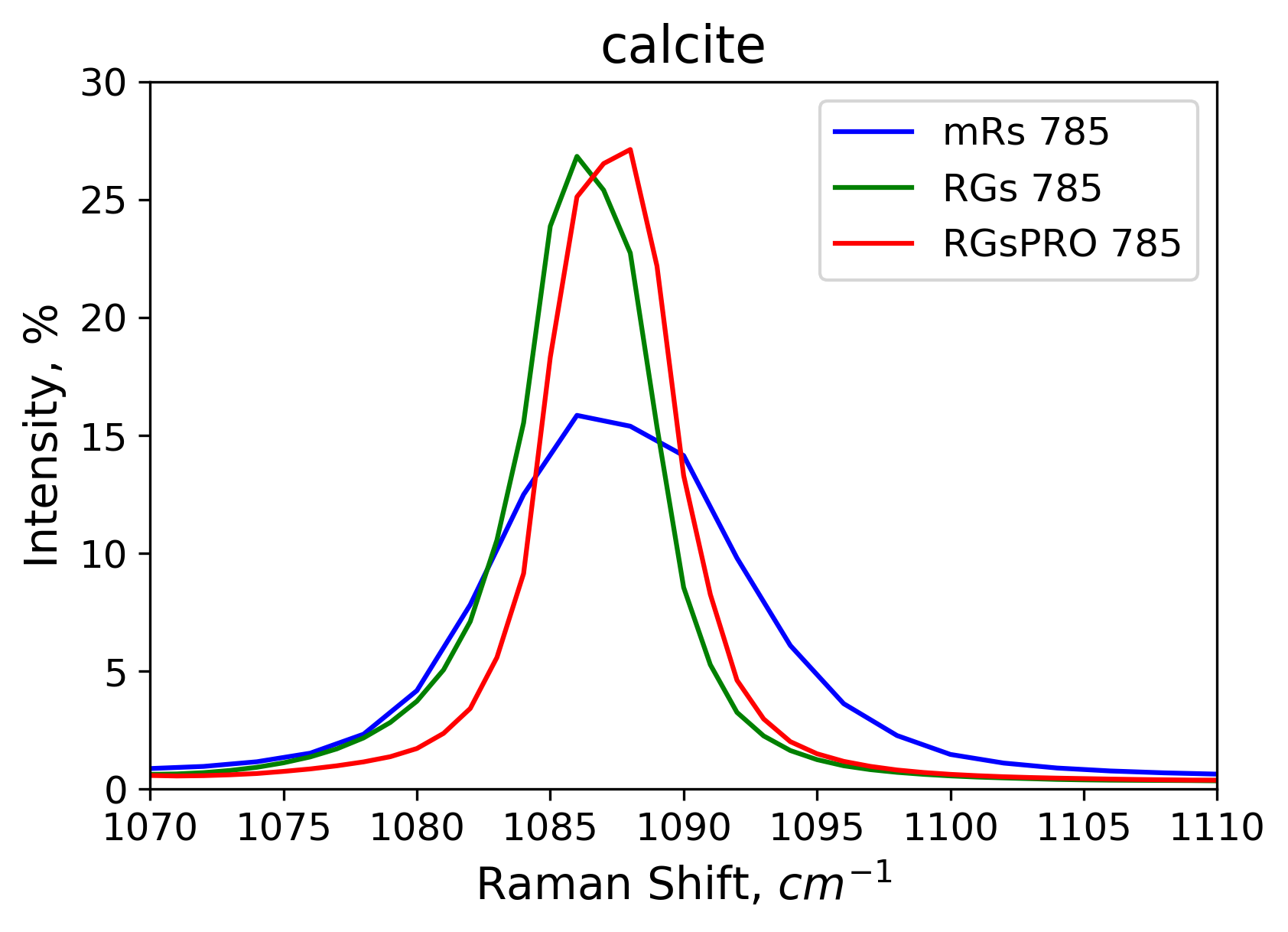
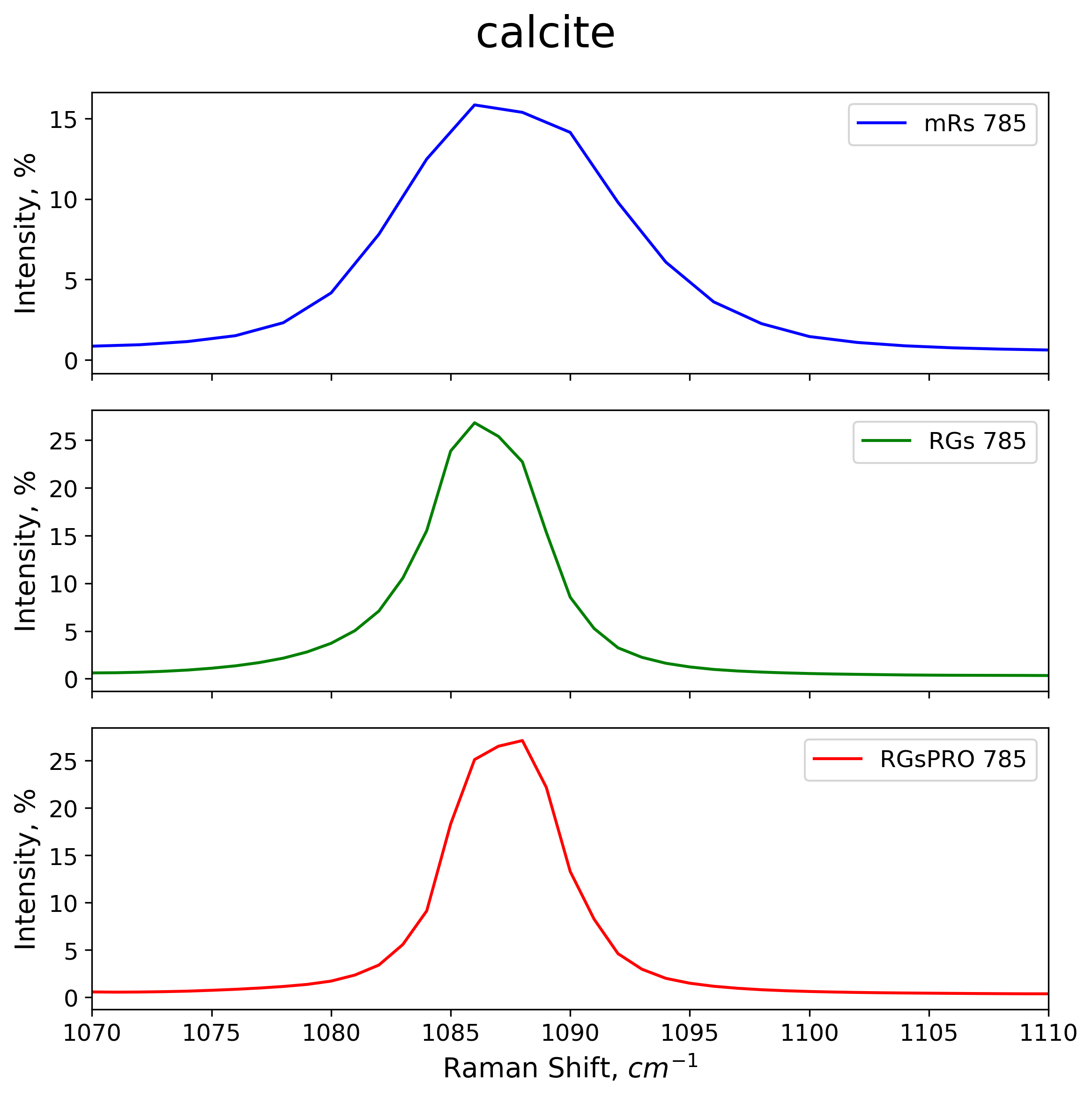
Using calcite as a reference (see page 3), the results clearly show:
- miniRaman: ~10 cm⁻¹ resolution
- RG: ~5 cm⁻¹ resolution
- RG Pro: ~4.6 cm⁻¹ resolution
This means RG and RG Pro provide approximately twice the resolving power compared to miniRaman.
In practical terms, this enables:
- Better differentiation of similar compounds
- Improved analysis of polymorphs
- Enhanced performance in research and advanced material characterization
Spectral Range: Each System Has Its Strength
Rather than a “one-size-fits-all” solution, the study highlights how each platform offers unique advantages depending on the application.
miniRaman – Extended High-Frequency Access
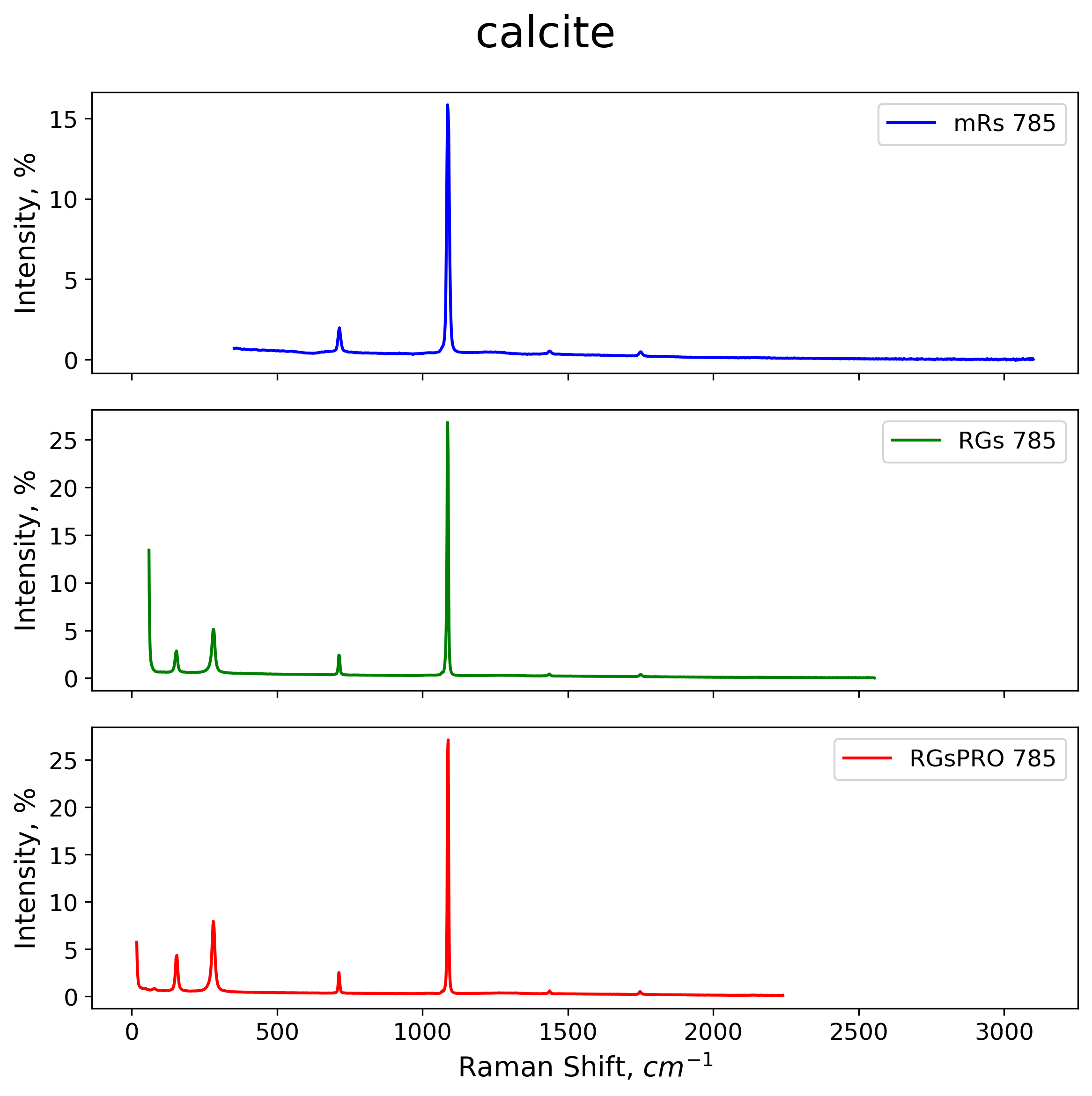
miniRaman stands out with its ability to measure up to ~3100 cm⁻¹, enabling access to:
- CH and OH stretching regions
- Organic and biological signatures
- Rapid field-based identification
This makes it ideal for field applications, screening, and operator-driven workflows.
RG – Balanced Performance
The RG spectrometer provides a strong balance between:
- High resolution
- Broad spectral range (up to ~2550 cm⁻¹)
- Portability
It is well suited for advanced industrial and laboratory applications where both flexibility and performance are required.
RG Pro – Unlocking Low-Frequency Insights
The RG Pro introduces a key capability: access to Raman shifts as low as 25 cm⁻¹.
This low-frequency region is critical for:
- Supramolecular structure analysis
- Polymorphism detection in pharmaceuticals
- Lattice and structural dynamics in materials
As demonstrated in multiple measurements (pages 2–5), RG Pro reveals structural information that is not accessible with conventional systems.